Hospitals and clinics use job order costing to determine how much to charge each patient.
What companies use job costing and process costing?
Examples of companies that use job costing systems include Boeing (airplanes), Lockheed Martin (advanced technology systems), and Deloitte & Touche (accounting). What are the similarities and differences between job costing and process costing systems?
Which method of costing is used in hospitals?
In traditional cost accounting systems, the volume-based costing (VBC) is the most popular cost accounting method. In this method, the indirect costs are allocated to each cost object (services or units of a hospital) using a single indicator named a cost driver (e.g., Labor hours, revenues or the number of patients).
What is the difference between job costing and process costing?
Job costing involves the detailed accumulation of production costs attributable to specific units or groups of units. Process costing involves the accumulation of costs for lengthy production runs involving products that are indistinguishable from each other.
What is an example of job costing?
Who uses job costing? Examples include home builders who design specific houses for each customer and accumulate the costs separately for each job, and caterers who accumulate the costs of each banquet separately. Consulting, law, and public accounting firms use job costing to measure the costs of serving each client.
What are the two basic types of costing systems?
The types of cost accounting systems include the job order costing and the process order costing.
What is the purpose of job costing?
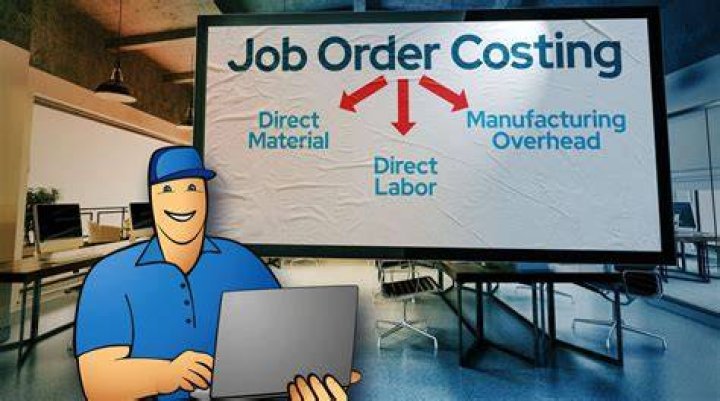
Job costing is an accounting tool that allows businesses to track costs by individual jobs. Job costing is calculated by accumulating the cost of labor, materials and overhead for a specific project.
What are the features of job costing?
Features of job costing
- Using job costing, the cost of each job is ascertained separately.
- It enables management to detect those jobs which are more profitable and unprofitable ones.
- Job costing provides the base for determining the cost of similar jobs to be undertaken in future as a part of future planning.
What are the features of process costing?
Features of Process Costing
- The production is continuous.
- The product is homogeneous.
- The process is standardized.
- The output of one process becomes the raw material of another process.
- The output of the last process is transferred to finished stock.
- Costs are collected process-wise.
What’s the difference between Job costing and process costing?
Job costing, on the other hand, requires business owners to manage multiple (sometimes hundreds or more) individual projects. Before you can set up an effective job or processing costing system, you have to separate direct costs from indirect, or overhead costs.
How does procedure costing work in a hospital?
Each procedure consumed a fraction of the total overhead cost of the operating theatre; thus, calculate the overhead cost for each procedure by using the proportion of time taken by that procedure. Procedure costing is useful or found to be most suitable for hospitals engaged in continuous care of patients.
How much does it cost to treat a patient in a hospital?
For example, if a hospital spends Rs.2,000,000 treating all patients and 2,000 patients are treated, then the average cost per case is Rs.1,000 2. Costing Methods for Specific Health Services – this describes the research methods applied to costing specific health care services.
Which is more important record keeping or process costing?
Record keeping. Much more record keeping is required for job costing, since time and materials must be charged to specific jobs. Process costing aggregates costs, and so requires less record keeping. Customer billing.