A tax levied on producers for every unit produced. A per unit tax increases firm’s marginal cost and average variable cost (thus, also the average total cost), but does not affect fixed costs. …
How do fixed costs affect a firm?
Higher fixed costs help operating leverage to increase. With a higher operating leverage, companies can produce more profit per additional unit produced.
What affects fixed cost?
While variable costs tend to remain flat, the impact of fixed costs on a company’s bottom line can change based on the number of products it produces. So, when production increases, the fixed costs drop. The price of a greater amount of goods can be spread over the same amount of a fixed cost.
What causes an increase in fixed costs?
A fixed cost is a cost that remains constant; it does not change with the output level of goods and services. It is an operating expense of a business, but it is independent of business activity. This cost rises as the production output level rises and decreases as the production output level decreases.
What happens when fixed costs decrease?
A decrease in the firm’s fixed cost will change its profits, but will not influence the firm’s decision about how much good to produce. True. A one-time change in the size of the fixed cost does not affect any part of the profit maximization condition (MR=MC). Therefore, the optimal output will remain the same.
Are utilities fixed costs?
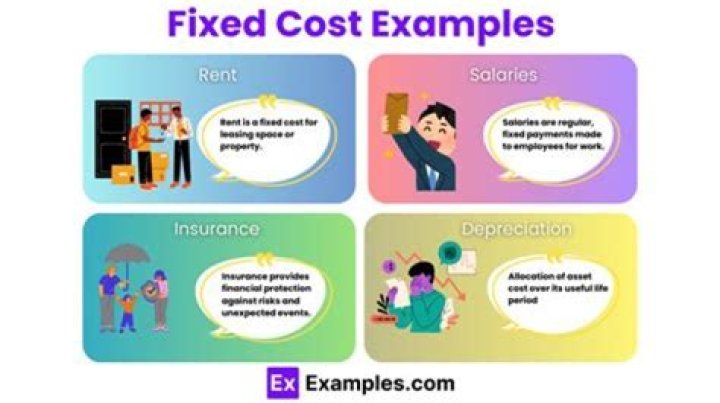
Fixed costs will be similar to those in a manufacturing facility. Administrative wages, rent, property taxes and utilities are all going to be fixed.
Are wages a fixed cost?
Wages paid to workers for their regular hours are a fixed cost. Any extra time they spend on the job is a variable cost.
How does a lump sum tax affect production?
A tax per unit will increase the producer’s variable costs as output increases. However, a lump sum tax is a fixed cost so this will not change depending on the output. The lump sum tax might be too big a burden for smaller producers and could lead to fewer producers. On the other hand, it could also encourage greater output.
Why is tax not a variable or marginal cost?
This tax is a fixed cost because it does not vary with the quantity of output produced. If Tis the amount of the tax and Fis the firm’s original fixed cost, the new total fixed cost increases to TFC = T + F. The tax does not affect marginal or variable cost because it does not vary with output.
How does a tax affect the supply curve?
So when each firm equates its own MC, to price its post-tax level of output will be less at each price than its pre-tax output at that price. This simply means that a tax will have the effect of shifting the industry supply curve to the left.
What are the effects of taxes on an industry?
1. Specific (Unit) Tax: For the sake of convenience we assume that all firms are identical. The industry consists of n 0 identical firms before the imposition of the tax. Figure 21.36 shows the initial equilibrium of both firm and industry. The industry supply curve intersects the demand curve at point E.