During the scientific revolution, changing perceptions about the role of the scientist in respect to nature, and the value of experimental or observed evidence, led to a scientific methodology in which empiricism played a large, but not absolute, role. Some of them were revolutions in their own fields.
How did people gain knowledge before the scientific revolution?
Where did people get their educational information prior to the Scientific Revolution? People got their educational information from authorities like ancient Greek writers or Catholic Church officials prior to the Scientific Revolution. What does science mean in latin? “Knowledge” or “understanding”.
What sources of knowledge did scholars turn to before the scientific revolution?
Before this time, Europeans relied on two main sources for their understanding of nature: The Bible and religious teachings. The work of classical thinkers, especially the philosopher Aristotle.
What scientist set off the scientific revolution?
Nicolaus Copernicus’
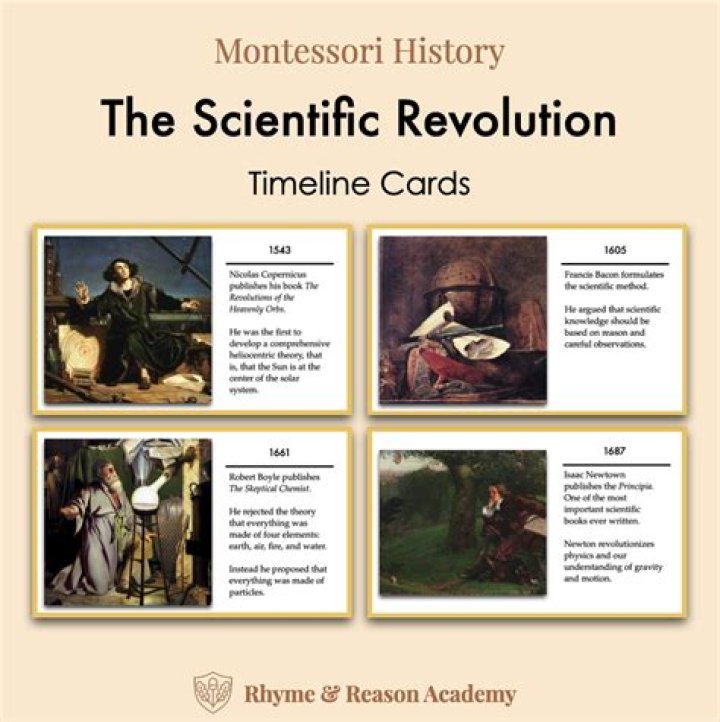
While its dates are debated, the publication in 1543 of Nicolaus Copernicus’ De revolutionibus orbium coelestium (On the Revolutions of the Heavenly Spheres) is often cited as marking the beginning of the Scientific Revolution.
What led up to the Scientific Revolution?
One development that helped lead to the Scientific Revolution was the growth of humanism during the Renaissance. All of these developments—the interest in ancient Greek writings, the growth of humanism, the experiments of alchemists—came together in the early 1500s to bring about the Scientific Revolution.
Why did the church not like the Scientific Revolution?
Church officials feared that as people began to believe scientific ideas, then people would start to question the Church, making people doubt key elements of the faith. Church officials feared that scientific ideas would threaten the powerful influence of the Church.
Where does the scientific method start?
observation
The scientific process typically starts with an observation (often a problem to be solved) that leads to a question. Let’s think about a simple problem that starts with an observation and apply the scientific method to solve the problem.
What were the most important ideas of the scientific revolution?
Some of the key ideas and theories that came out of the scientific revolution were that Earth revolves around the Sun, matter is composed of small particles, everything that happens can be explained mechanically or mechanistically with the help of mathematics, general principles or natural laws must be supported by …
What are 3 causes of the Scientific Revolution?
Causes: Renaissance encouraged curiosity, investigation, discovery, modern day knowledge. Caused people to question old beliefs. During the era of the Scientific Revolution, people began using experiments and mathematics to understand mysteries. Effects: New discoveries were made, old beliefs began to be proven wrong.
What was science like before the Scientific Revolution?
Before the Scientific Revolution, most educated people who studied the world took guidance from the explanations given by authorities like ancient Greek writers and Catholic Church officials. They gained knowledge by observing the world around them and coming up with logical explanations for what they saw.
What did the scientists of the scientific revolution do?
Scientists of the Scientific Revolution The Scientific Revolution was a period in the 17th and 18th Century which saw the emergence of modern science with major breakthroughs and developments in maths, physics, chemistry and biology.
How to study before or after the scientific revolution?
Start studying Before/After Scientific Revolution. Learn vocabulary, terms, and more with flashcards, games, and other study tools. Search Browse Create Log inSign up Log inSign up Before/After Scientific Revolution STUDY Flashcards Learn Write Spell Test PLAY Match Gravity Created by Maria_Morrison21 Terms in this set (13)
What did Europeans rely on before the scientific revolution?
Before this time, Europeans relied on two main sources for their understanding of nature. One was the Bible and religious teachings. The other was the work of classical thinkers, especially the philosopher Aristotle. During the Scientific Revolution, scientists challenged traditional teachings about nature.
When did the scientific revolution start and end?
Some historians consider the development of modern science the most important event in the intellectual history of humankind. The series of events that led to the birth of modern science is called the Scientific Revolution. It occurred between about 1540 and 1700.