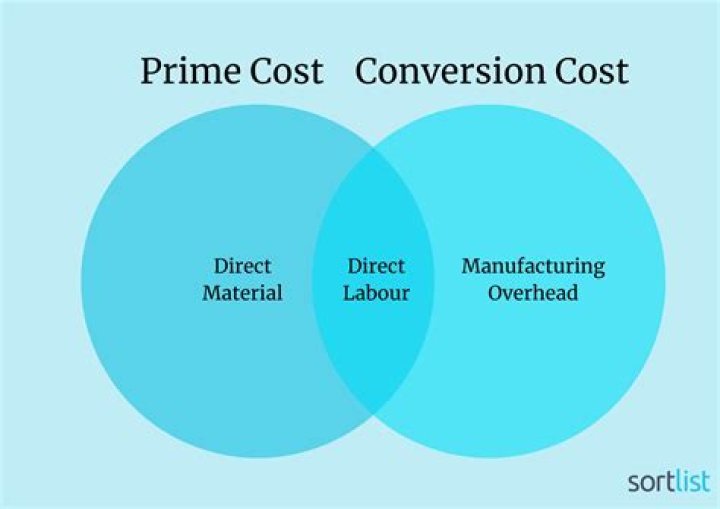
Conversion costs include the manufacturing costs that are needed to convert direct materials into final products: direct labor costs and manufacturing overhead costs.
How do you calculate manufacturing cost conversion?
Conversion Cost Formula = Manufacturing Overheads + Direct Labour
- Manufacturing Overheads. read more means the expenses which can be directly attributed to each unit of product or the process.
- Direct Labor.
Is product cost consists of the sum of prime cost and conversion cost?
Product cost consists of the sum of prime cost and conversion cost. Total fixed costs decrease with increase in the number of units produced and increase with decrease in output. Period costs are found in both merchandising and manufacturing firms.
What product cost is both a prime cost and a conversion cost?
Direct Labor
Direct Labor is both a prime cost and a conversion cost.
Which cost is not included in conversion cost pricing?
Conversion costs are considered any manufacturing cost that does not include the direct cost of raw materials.
What are conversion costs in manufacturing?
Conversion costs are the costs involved in converting the direct material into the product and therefore are direct labor and manufacturing overhead. Conversion costs are the direct labor and manufacturing overhead involved in the production process and exist regardless of the accounting system used.
What is a conversion formula?
The formula for a conversion rate is the number of times a goal is completed divided by the number of people who had the opportunity to complete that goal. If you made 100 sales last month, and 1,000 people visited your website, your conversion rate would be 100 / 1,000 = 10%.
What is not included in conversion costs?
Conversion costs are considered any manufacturing cost that does not include the direct cost of raw materials. Equipment maintenance costs. Factory or office rent. Insurance related to production, such as factory insurance.
What is Prime cost example?
A prime cost is the total direct costs of production, including raw materials and labor. Indirect costs, such as utilities, manager salaries, and delivery costs, are not included in prime costs. Businesses need to calculate the prime cost of each product manufactured to ensure they are generating a profit.
What is prime cost sum?
A prime cost sum (PC or PC sum) is an allowance, usually calculated by the cost consultant, for the supply of work or materials to be provided by a contractor or supplier that will be nominated by the client (that is, a supplier that is selected by the client to carry out an element of the works and imposed on the main …
How are prime costs and conversion costs classified?
Manufacturing costs (direct materials, direct labor, and factory overhead) can be classified further into: (1) prime costs and (2) conversion costs. Manufacturing costs may be classified into prime and conversion costs. Prime costs include direct materials and direct labor.
How are prime costs related to direct labor?
Prime costs refer to the total cost of direct materials and direct labor. Direct materials pertain to cost of items that form an integral or major part of the finished product.
What are the costs of converting raw materials to finished products?
Conversion costs include direct labor and overhead expenses incurred due to the transformation of raw materials into finished products.
Why is it important to know prime costs?
The calculation of prime costs also helps organizations set prices at a level that produce an acceptable amount of profit. Consider a professional furniture maker who is hired to construct a coffee table for a customer. The prime costs for creating the table include direct labor and raw materials such as lumber, hardware, and paint.