By mechanizing the process, the gin could produce more than 50 pounds of lint per day. Cotton fabric, formerly quite expensive due to the high cost of production, became dramatically cheaper, and cotton clothing became commonplace.
How much does it cost to gin cotton?
Average processing capacity was about 38,000 bales per gin, which reflects the large crop with the reduced number of gins. The average total variable cost was $23.38 per bale, a decrease of 6 percent over 2013 survey results.
When was the cotton gin invented 1793?
Cotton gin, machine for cleaning cotton of its seeds, invented in the United States by Eli Whitney in 1793.
Is the cotton gin still used today?
The cotton gin was a machine that took the cotton through comb like “fingers” that separated the cotton fibers from the cotton seeds. There are still cotton gins today that are currently used for separating and processing cotton. Cotton gins have changed over the many years since Eli Whitney first invented his.
How does a modern cotton gin work?
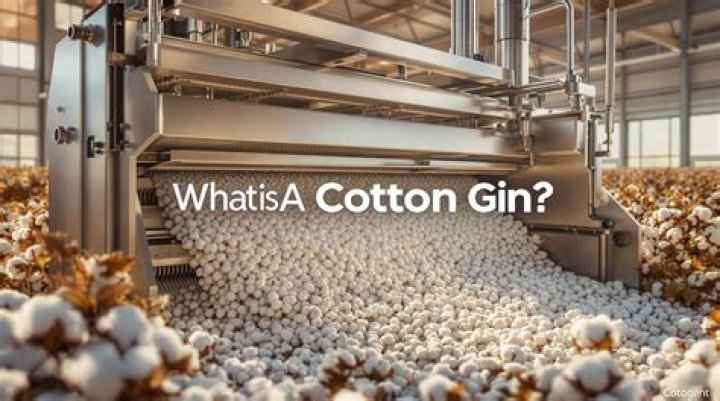
The gin (short for engine) consists of wire teeth mounted on a boxed rotating cylinder that, when cranked, pulls cotton fiber through small grates to separate the seeds, while a rotating brush removes lint from the spikes to avoid jams.
What are the pros and cons of the cotton gin?
Pros and Cons
- Cotton could be picked at a mucher faster rate. This meant that it was much more accessible.
- Cotton became a major trading good for the South.
- Southern economy was boosted.
- The price of cotton decreased drestically because it was much easier to produce.
What was good about the cotton gin?
While it was true that the cotton gin reduced the labor of removing seeds, it did not reduce the need for slaves to grow and pick the cotton. Cotton growing became so profitable for the planters that it greatly increased their demand for both land and slave labor.
Is the cotton gin still being used today?
What benefit was there to using a cotton gin?
While it was true that the cotton gin reduced the labor of removing seeds, it did not reduce the need for slaves to grow and pick the cotton. In fact, the opposite occurred. Cotton growing became so profitable for the planters that it greatly increased their demand for both land and slave labor.
Eli Whitney patented his cotton engine, or “gin,” in 1794. By mechanizing the process, the gin could produce more than 50 pounds of lint per day. Cotton fabric, formerly quite expensive due to the high cost of production, became dramatically cheaper, and cotton clothing became commonplace.
How much was cotton worth in the 1800s?
In 1800, prior to the invention of the cotton gin, cotton sold for 37 cents per pound. While that might seem like a low price today, it’s the equivalent of $2.89 per pound in 1998 dollars, according to Frank Weathersby of Affinity Cotton Trading.
What is bad about the cotton gin?
Negative- The negative effects of the “cotton gin” was that it made the need for slaves greatly increase, and the number of slave states shot up. Plantations grew, and work became regimented and relentless (unending).
Did cotton gin affect slavery?
How many pounds of cotton did slaves pick a day?
With the invention of the cotton gin, one slave could gin 50 pounds of cotton per day. Did this mean plantation owners needed fewer slaves?
How much is a pound of cotton worth today?
The average price received by farmers for Upland cotton in July was 60.40 cents per pound in the 2019-2020 marketing year. The 2018-2019 marketing year average price was 70.30 cents, compared to the 2017-2018 marketing year of 68.60 cents, according to the National Agricultural Statistics Service, USDA.
What did the cotton gin do and who invented it?
The cotton gin is a machine designed to remove cotton from its seeds. The process uses a small screen and pulling hooks to force the cotton through the screen. It was invented by Eli Whitney on March 14, 1794, one of the many inventions that was created during the American Industrial Revolution.
What’s the average price of Gordon’s gin?
Gordon’s As you can see, gin can vary widely in price. Gin pricing goes from low cost (budget), to middle of the road (standard), to special occasion levels (premium). Why is there such a variety if all gin uses juniper berries?
How much does it cost to gin a bale of cotton?
Those ginning less than 10,000 bales had variable costs of $24.83 per bale; those ginning 15,000 to 25,000 bales, $19.89; those ginning 25,000 to 40,000 bales, $19.54; and those ginning more than 40,000 bales, $18.39.
Where are the highest costs for cotton ginning?
Cotton gins in the West and Southwest had the highest per bale ginning costs, while those in the Mid-South and Southeast had the lowest, according to a survey taken during the 2010 ginning season. In all regions, seasonal labor was the largest single expense item of the five major variable costs.