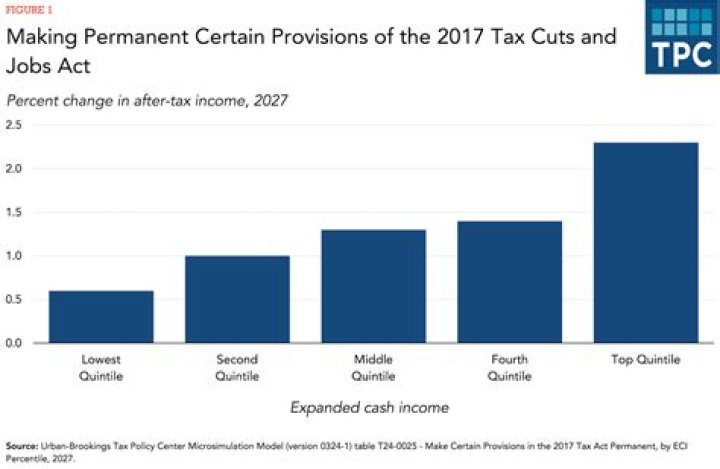
Major elements of the changes include reducing tax rates for businesses and individuals, increasing the standard deduction and family tax credits, eliminating personal exemptions and making it less beneficial to itemize deductions, limiting deductions for state and local income taxes and property taxes, further …
What did the tax cut and Jobs Act do?
The Tax Cut and Jobs Act (TCJA) reduced the top corporate income tax rate from 35 percent to 21 percent, bringing the US rate below the average for most other Organisation for Economic Co-operation and Development countries, and eliminated the graduated corporate rate schedule (table 1).
How much did the 2017 tax cuts and jobs act cost?
On December 22, 2017, President Donald Trump signed into law the so-called Tax Cuts and Jobs Act (TCJA), a $1.9 trillion tax bill favoring corporations and wealthy Americans. At its heart is a large cut in the corporate tax rate.
Did taxes go up 2021?
Starting at the end of 2021, the top individual income tax rate would rise to 39.6 percent from 37 percent, reversing the Trump administration’s tax cuts for the highest income taxpayers. The new rate would apply to income over $509,300 for married couples filing jointly and $452,700 unmarried individuals.
How will tax cuts affect the economy?
Lower income tax rates increase the spending power of consumers and can increase aggregate demand, leading to higher economic growth (and possibly inflation). On the supply side, income tax cuts may also increase incentives to work – leading to higher productivity.
Who is eligible for tax cuts and Jobs Act of 2017?
The Tax Cuts and Jobs Act of 2017 allows a tax credit for employers that provide paid family and medical leave to employees. A 501 (c) (3) organization is not eligible for the tax credit.
How does the tax cuts and Jobs Act work?
The plan would reform the individual income tax code by lowering tax rates on wages, investment, and business income; broadening the tax base; and simplifying the tax code. The plan would lower the corporate income tax rate to 20 percent and move the United States from a worldwide to a territorial system of taxation.
What was the effect of the 2017 tax cut?
Given that the economy grew in 2018, and in the absence of another policy that could have caused a large revenue loss, the data imply that the 2017 tax cut substantially reduced revenues. The 2017 tax cut reduced the top corporate tax rate from 35 percent to 21 percent—a 40 percent reduction. It also reduced income taxes for most Americans.
Are there any limitations on itemized deductions under the tax cuts and Jobs Act?
The “Pease limitation” on itemized deductions doesn’t apply. Qualified bicycle commuting exclusion not applicable. The exclusion from gross income and wages for qualified bicycle commuting reimbursements doesn’t apply. Exclusion for moving expense reimbursements not applicable.