Veblen was a sociologist as much as he was an economist : he believed that the economy was embedded in social institutions, thus disagreeing with his contemporaries, who were busy building fences around “pure” economics to protect it from other social sciences.
What are the economic ideas of Veblen?
Thorstein Veblen was an economist noted for his contributions to the development of American institutionalist economics. Veblen is best known for developing the concept of conspicuous consumption, or excessive consumption for the sake of signaling social status.
Was Veblen a socialist?
Although the reading public saw him as a political radical or socialist, Veblen was a pessimist who never committed himself to any form of political action.
What are the theories of leisure?
3. Theories of Leisure
- 3.1 Aristotelian Theory. a) Theory.
- 3.2 Compensatory Theory. a) Theory.
- 3.3 Spillover Theory. a) Theory.
- 3.4 Familiarity Theory. a) Theory.
- 3.5 Personal Community Theory. a) Theory.
- 3.6 Self-development Theory. a) Theory.
Is Veblen a Marxist?
The relationship between Karl Marx and Thorstein Veblen has created some controversy between various scholars and schools of economic thought. While some point out the Marxist influences in Veblen’s writings, the general consensus is that “Veblen is not an American Marxist”.
Was Thorstein Veblen a Marxist?
As a leading intellectual of the Progressive Era in the US, Veblen attacked production for profit. His emphasis on conspicuous consumption greatly influenced economists who engaged in non-Marxist critiques of fascism, capitalism, and of technological determinism.
What is an example of a Veblen good?
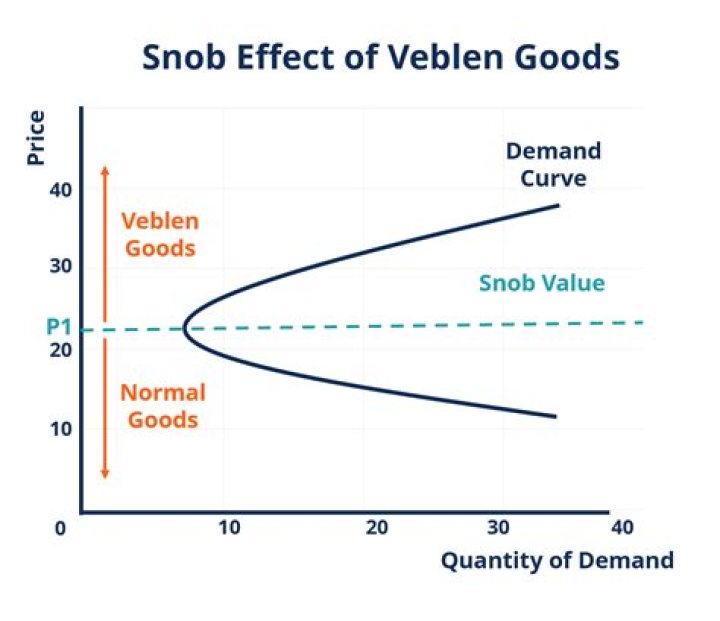
A Veblen good is a good for which demand increases as the price increases. Veblen goods are typically high-quality goods that are made well, are exclusive, and are a status symbol. Examples of Veblen goods include designer jewelry, yachts, and luxury cars.
What does Veblenian mean?
a person who adheres to the economic or sociological theories of Thorstein Veblen.
What are the two types of leisure?
The total leisure time indicator is the sum of two categories of leisure: active leisure time and passive leisure time. Physical leisure, which encompasses sports and exercise. Passive leisure is the time that people spend at home in activities that are relaxing and that require little effort.
What is the main idea of the theory of the leisure class?
The Theory of the Leisure Class established that the economic life of a modern society in the late 19th century is based upon the social stratification of tribal and feudal societies, rather than upon merit, that is to say, upon social and economic utility.
What did Thorstein Veblen mean by the luxury belief class?
For these affluent social strivers, luxury beliefs offer them a new way to gain status. Thorstein Veblen’s famous “leisure class” has evolved into the “luxury belief class.” Veblen, an economist and sociologist, made his observations about social class in the late nineteenth century.
What did Thorstein Veblen say about conspicuous consumption?
Thorstein Veblen. People engage in conspicuous consumption, along with “conspicuous leisure”, to demonstrate wealth or to mark social status – Veblen explains the concept in his best-known book, The Theory of the Leisure Class (1899). Historians of economic thought regard Veblen as the leader of the institutional economics movement.
Who was Thorstein Veblen and what did he do?
institutionalism: Early 20th-century American institutionalism. The American economist and sociologist Thorstein Veblen was a pivotal figure who criticized the neoclassical approach for its focus on individuals. He argued that individuals are shaped by their institutional and sociocultural context.
What did Thorstein Veblen mean by refined tastes?
Consider the Veblen quote, “Refined tastes, manners, habits of life are a useful evidence of gentility, because good breeding requires time, application and expense, and can therefore not be compassed by those whose time and energy are taken up with work.”