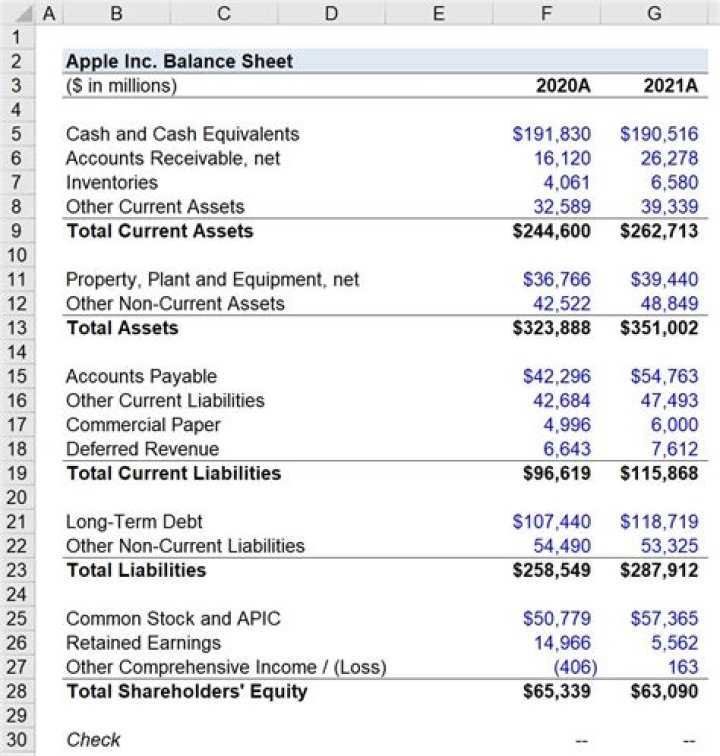
Equity represents the shareholders’ stake in the company, identified on a company’s balance sheet. The calculation of equity is a company’s total assets minus its total liabilities, and is used in several key financial ratios such as ROE.
Is equity an asset or liability?
Equity is also referred to as net worth or capital and shareholders equity. This equity becomes an asset as it is something that a homeowner can borrow against if need be. You can calculate it by deducting all liabilities from the total value of an asset: (Equity = Assets – Liabilities).
How do you calculate equity on a balance sheet?
All the information needed to compute a company’s shareholder equity is available on its balance sheet. It is calculated by subtracting total liabilities from total assets. If equity is positive, the company has enough assets to cover its liabilities. If negative, the company’s liabilities exceed its assets.
What are examples of equity on a balance sheet?
The most common stockholders’ equity accounts are as follows:
- Common stock.
- Additional paid-in capital on common stock.
- Preferred stock.
- Additional paid-in capital on preferred stock.
- Retained earnings.
- Treasury stock.
Why is equity not an asset?
The primary difference between Equity and Assets is that equity is anything that is invested in the company by its owner, whereas, the asset is anything that is owned by the company to provide the economic benefits in the future.
Is equity a debit or credit?
Regardless of what elements are present in the business transaction, a journal entry will always have AT least one debit and one credit….Recording changes in Income Statement Accounts.
| Account Type | Normal Balance |
|---|---|
| Liability | CREDIT |
| Equity | CREDIT |
| Revenue | CREDIT |
| Expense | DEBIT |
What does the term equity mean on a balance sheet?
Updated May 14, 2018. The term equity, or net assets, is a section on your balance sheet that reflects the difference between your total business assets, which are all the resources your company owns, and its liabilities, which are all the claims against your company.
Where do you find shareholder equity on a balance sheet?
Locate the company’s total assets on the balance sheet for the period. Locate total liabilities, which should be listed separately on the balance sheet. Subtract total assets from total liabilities to arrive at shareholder equity.
What makes up the balance sheet of a company?
A company’s balance sheet has three major sections, assets, liabilities and stockholders’ equity. Liability represents the total debt of the company and owner’s capital represents shareholders’ ownership. Liabilities and owner’s capital are the two major sources of financing the assets of a company.
Which is an example of equity in a company?
Equity in a company may include tangible assets (assets in physical form) and intangible assets (assets you can’t actually touch, but are valuable). Here are some examples: Goodwill (representation of a purchased company’s total assets). The assets of a company are offset by its liabilities.