Advantages and Benefits of Marginal Costing Cost control: Marginal costing makes it easier to determine and control costs of production. By avoiding the arbitrary allocation of fixed overhead costs, management can concentrate on achieving and maintaining a uniform and consistent marginal cost.
What are the arguments in Favour and against marginal cost pricing?
Arguments in favor of Marginal Costing (Advantages) – As fixed costs are mostly overheads, and, under marginal costing these are all treated as period costs and charged into the income statement therefore marginal costing avoids arbitrary allocation of overheads to units of output.
What is marginal costing approach?
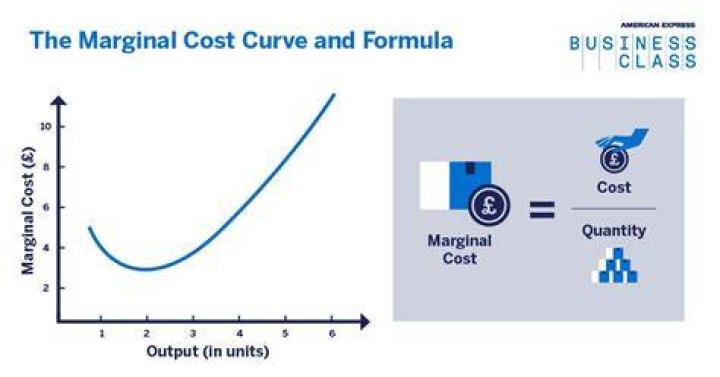
Definition: Marginal Costing is a costing technique wherein the marginal cost, i.e. variable cost is charged to units of cost, while the fixed cost for the period is completely written off against the contribution. Marginal cost is the change in the total cost when the quantity produced is incremented by one.
What are the advantages of marginal costing over absorption costing?
(1) Marginal costing system is very useful for internal purposes – decision making, planning and control. (2) Calculation of cost of sales, under marginal costing system, is very simple to understand. (3) Marginal costing system is very simple to operate as it does not require complex apportionments of overheads.
What are the advantages and disadvantages of marginal cost pricing?
Ignores current market prices – Marginal cost pricing does not consider prevailing market prices. It is strictly based on variable costs. Does not build customer loyalty – Customers who take advantage of marginal cost prices are usually price-sensitive and will not become loyal, long-term purchasers.
What is the major difference between absorption costing and marginal costing?
Marginal costing is a method where the variable costs are considered as the product cost, and the fixed costs are considered as the costs of the period. Absorption costing, on the other hand, is a method that considers both fixed costs and variable costs as product costs.
How is marginal costing used in management accounting?
From this we can develop the following definition of marginal costing as used in management accounting: Marginal costing is the accounting system in which variable costsare charged to cost units and fixed costs of the period are written offin full against the aggregate contribution.
Why are semi-variable costs not considered in marginal costing?
In marginal costing, semi-variable or semi-fixed costs are not considered. 2. Time element ignored – Fixed costs and variable costs are different in the short run; but in the long run, all costs are variable. In the long run all costs change at varying levels of operation.
How is opening and closing inventory valued under marginal costing?
Valuation of inventory – opening and closing inventory are valued at marginal (variable) cost under marginal costing. The fixed costs actually incurred are deducted from contribution earned in order to determine the profit for the period. A company commenced business on 1 March making one product only, the cost card of which is as follows:
Which is an unrealistic assumption in marginal costing?
Unrealistic assumption – Assumption of sale price will remain the same at different levels of operation. In real life, they may change and give unrealistic results. 4. Difficulty in the fixation of price – Under marginal costing, selling price is fixed on the basis of contribution.