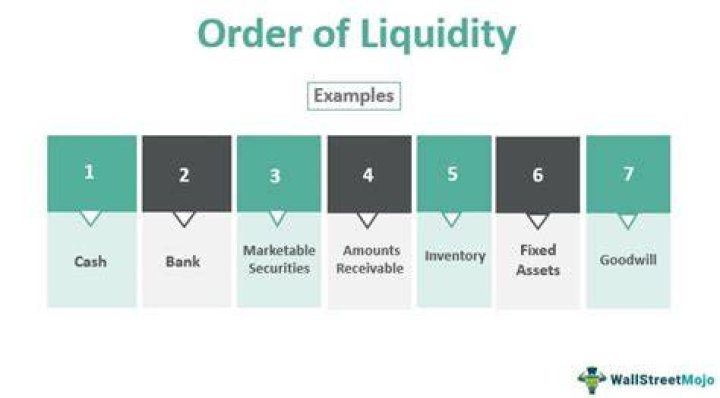
Order of liquidity is the presentation of various assets in the balance sheet in the order of time taken by each to get converted into cash whereby cash is considered as a most liquid asset, followed by cash and cash equivalents, marketable securities, account receivables, inventories, non-current investments, loans …
What is the order of accounts on the balance sheet?
The list of each account a company owns is typically shown in the order the accounts appear in its financial statements. That means that balance sheet accounts, assets, liabilities, and shareholders’ equity are listed first, followed by accounts in the income statement — revenues and expenses.
Where is supplies in order of liquidity?
Current assets are listed in the order in which they are expected to turn to cash. This is known as the order of liquidity. Since cash is the most liquid asset, it is listed first. After cash, the order is: temporary investments, accounts receivable, inventory, supplies, and prepaid expenses.
What comes first on a balance sheet?
Order of liquidity is the presentation of assets in the balance sheet in the order of the amount of time it would usually take to convert them into cash. Thus, cash is always presented first, followed by marketable securities, then accounts receivable, then inventory, and then fixed assets. Goodwill is listed last.
What is the correct order of financial statements?
Financial statements are compiled in a specific order because information from one statement carries over to the next statement. The trial balance is the first step in the process, followed by the adjusted trial balance, the income statement, the balance sheet and the statement of owner’s equity.
How are current assets arranged in order of liquidity?
Current assets are usually listed in the order of their liquidity and frequently consist of cash, temporary investments, accounts receivable, inventories and prepaid expenses. Cash is simply the money on hand and/or on deposit that is available for general business purposes.
What comes first cash flow or balance sheet?
Net Income & Retained Earnings Net income. While it is arrived at through from the bottom of the income statement links to the balance sheet and cash flow statement. On the balance sheet, it feeds into retained earnings and on the cash flow statement, it is the starting point for the cash from operations section.
Do liabilities have to be in order of liquidity?
Account Presentation. In the asset sections mentioned above, the accounts are listed in the descending order of their liquidity (how quickly and easily they can be converted to cash). Similarly, liabilities are listed in the order of their priority for payment.
What is the order of current assets?
The typical order in which current assets appear is cash (including currency, checking accounts, and petty cash), short-term investments (such as liquid marketable securities), accounts receivable, inventory, supplies, and pre-paid expenses.