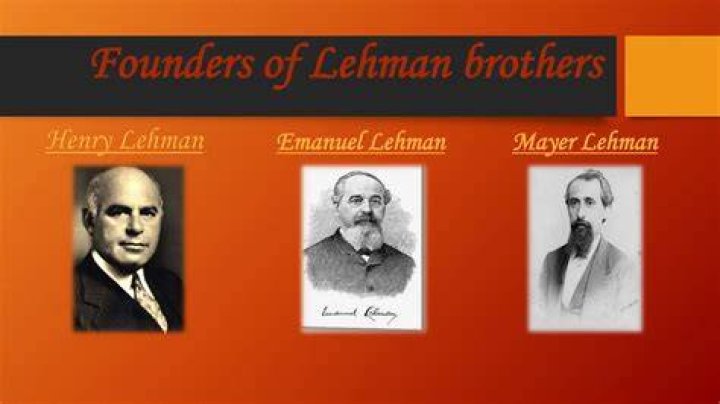
Lehman Brothers’ stock was selling at $86 a share in February 2007, giving the company a market capitalization. Market Cap is equal to the current share price multiplied by the number of shares outstanding. The investing community often uses the market capitalization value to rank companies of nearly $60 billion.
What caused the failure of Lehman Brothers?
What Caused Lehman Brothers to Collapse? Fortune magazine declared Lehman Brothers as the No. 1 “most admired securities firm” in 2007 – just one year before the firm filed for bankruptcy. One of the primary causes for the firm’s collapse was due to their overzealous lending during the housing bubble in 2003 to 2004.
What is the Lehman effect?
The term Lehman Wave refers to an economy-wide fluctuation in production and economic activity, with a wavelength of between 12 and 18 months, driven by a sudden major disruption of the economic system. The Lehman Wave is a damped, wave-like fluctuation around equilibrium.
Who was the CEO of Lehman Brothers when it failed?
Richard (Dick) Fuld
Richard (Dick) Fuld was the last CEO of Lehman Brothers prior to its collapse ten years ago on 15 September 2018. After years of avoiding the public eye, Fuld has been rebuilding his career as CEO of wealth and asset management firm Matrix Private Capital Group.
Did Lehman Brothers clients lose money?
On September 10, Lehman announced a loss of $3.9 billion and their intent to sell off a majority stake in their investment-management business, which included Neuberger Berman. The stock slid 7% that day.
What caused the 2008 recession?
The Great Recession, one of the worst economic declines in US history, officially lasted from December 2007 to June 2009. The collapse of the housing market — fueled by low interest rates, easy credit, insufficient regulation, and toxic subprime mortgages — led to the economic crisis.
What did the Treasury do in the financial Panic of 2008?
Alarmed that a failure of Fannie or Freddie could pull down the rest of the financial system, the US Treasury decided to exercise its new ‘bazooka’ authority on 6 September 2008 – approximately five weeks after receiving it – concluding that such action would calm the financial markets.
Who are the issuers of Econ 2035 flashcards?
A) include banks and other depository institutions. B) include the New York and American stock exchanges. C) directly issue claims on individual borrowers to savers. D) are owned and operated by the federal government. A) for government securities. B) in which newly issued claims are sold to buyers by borrowers.
Why did the Treasury ask Congress for a blank cheque?
The US Treasury asked Congress for a blank cheque – the power to inject unlimited amounts of additional capital into Fannie and Freddie, arguing that if the market knew that the Treasury had a ‘bazooka’ instead of a ‘squirt gun’, it was substantially less likely that the Treasury would be required to provide any financial assistance at all.
How did the Federal Reserve help AIG and Lehman Brothers?
In any event, on the following weekend Lehman Brothers and AIG collapsed, and Merrill Lynch was bought at what was then thought to be a fire sale price by Bank of America. The Federal Reserve exercised its emergency powers under section 13 (3) of the Federal Reserve Act to rescue AIG, but the Government allowed Lehman Brothers to fail.