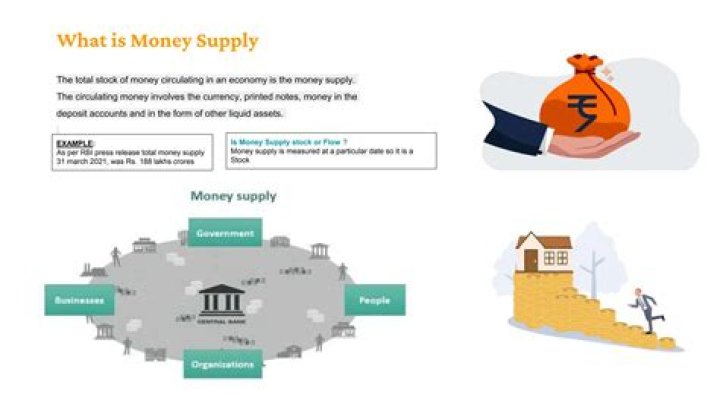
The government and the banking system- Central and Commercial banks of economy supplies money.
Who supplies money in the economy?
Some economists also include near money, or such liquid assets as savings, deposits and government bills in the money supply. The total supply of money is determined by banks, the Federal Reserve, businessmen, the government and consumers.
How does money supply work?
In open operations, the Fed buys and sells government securities in the open market. If the Fed wants to increase the money supply, it buys government bonds. Conversely, if the Fed wants to decrease the money supply, it sells bonds from its account, thus taking in cash and removing money from the economic system.
What is ideal supply of money?
Ideal supply of money is that money supply which is required to buy goods and services produced in an economy. In other words, we can say that this money keeps the aggregate demand equal to aggregate supply so that inflation or deflation situations does not exist in the economy.
What is the main source of money supply?
In most modern economies, most of the money supply is in the form of bank deposits. Central banks monitor the amount of money in the economy by measuring the so-called monetary aggregates.
What causes money supply to rise?
Money supply can rise if Government sells bonds or bills to the non-banking sector. If the public buys anything from the government they will reduce their deposits in banks; there will be no expansion in the money supply.
What kind of suppliers do I need for my business?
Some of your suppliers could be a flour milling company (supplying you with flour), the electricity company (supplies you electricity), a farming business (supplies you with various grains like wheat, corn, spelt, etc.). These are all suppliers.
Where does the government get its money supply from?
Each country’s central bank may use its own definitions of what constitutes money for its purposes. Money supply data is recorded and published, usually by the government or the central bank of the country.
Who is on the supply side of the financial market?
Those who save money (or make financial investments, which is the same thing), whether individuals or businesses, are on the supply side of the financial market. Those who borrow money are on the demand side of the financial market.
Why is it important to know about the money supply?
Key Takeaways Money Supply is the total quantity of money in circulation at a point in time. Changes in the money supply are closely watched because of the relationship between money and macro economic variables such as inflation.