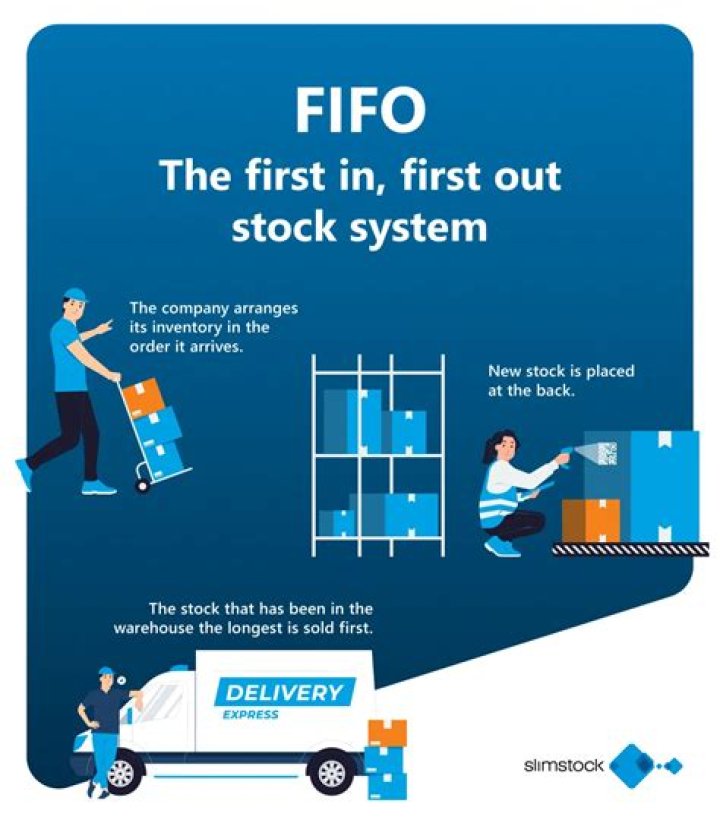
Amazon Uses the FIFO Method to Determine Storage Fees In other words—your first batch of products that arrived at the warehouse will also be the first to go out the door when customers order them. Once they’re gone, they won’t be subject to a storage fee.
Does Amazon follow FIFO?
They do not follow FIFO rule. You will also find that stock will be usually sent from the warehouse closest to the customer. Might have new or old stock there.
Is FBA a FIFO?
No. According to Amazon, they re-position our inventory to be close to our customers. It doesn’t make much sense because they are constantly moving it from one Fulfillment Center (FC) to another.
Is Amazon FBA First In First Out?
Amazon FBA is NOT first in first out. You have to control your inventory remotely, as you ship in. We are letting the inventory drop to almost nothing before restocking.
Why would you use FIFO over LIFO?
FIFO inventory accounting provides more accurate inventory valuations since the assumption is the items remaining in inventory were purchased at more recent–and typically higher–prices. Under FIFO the value of inventory is higher compared to LIFO.
Is FBA better than FBM?
FBA vs FBM: “Which is better for me?” FBA is typically best for high volume, large margin products. This type of fulfillment is for sellers who are ready/willing to drop the selling price to the lowest possible profit point if need be. FBM is generally good for smaller scale, small margins products or one-offs.
What percent does Amazon take?
Remember, Amazon takes a cut of every item sold. This ranges from as low as 6 percent (personal computers) to as high as 45 percent (Amazon device accessories), although referral fees for media products are 15 percent of the total sales price of a product, rather than the item price alone.
Can I ship directly from Ali Baba to Amazon FBA?
The next most important question that many people have is “Can I ship directly from Alibaba to Amazon FBA?” Yes, you can have your orders shipped to an Amazon FBA warehouse. Take into account customs as well and then just have your products shipped directly to the Amazon warehouse.
Which is better for a company, LIFO or FIFO?
However, if the units had been purchased on May 15 and May 27 for the same amount, there would be no impact on financial statements. Most companies prefer FIFO to LIFO because there is no valid reason for using recent inventory first, while leaving older inventory to become outdated.
What’s the difference between FIFO and last in first out?
Last in/first out (LIFO) and first in/first out (FIFO) are the two most common types of inventory valuation methods used. Both LIFO and FIFO are GAAP-approved inventory methods, but if you decide to use LIFO, you’ll need to complete a special application with the IRS for approval.
What should I know about Amazon SQS FIFO queues?
For best practices of working with FIFO queues, see Additional recommendations for Amazon SQS FIFO queues and Recommendations for Amazon SQS standard and FIFO queues . For information about compatibility of clients and services with FIFO queues, see Compatibility .
How are cost of goods sold valued using LIFO?
Here’s how the inventory is valued using LIFO: Using the LIFO valuation method, the cost of goods sold reflects the value of the inventory that was included in the latest purchase. A total of 150 doors were sold, using inventory as follows: Using LIFO, the total cost of goods sold is $17,125.